
NFL Betting Strategies: Advanced Football Tips 2026
 Available in US
Master the market with professional NFL betting strategies focused on key numbers, situational spots, and advanced analytics.

Deploying effective NFL betting strategies reveals that the league is simultaneously the easiest and hardest sport to bet on. Easy because there’s an ocean of information available, games happen once a week giving you time to analyze, and the betting markets are deep with plenty of options. Hard because those same factors mean the lines are incredibly sharp. Every NFL game gets bet heavily by professional syndicates with sophisticated models and bankrolls that dwarf what recreational bettors can imagine. If you’re going to beat the NFL betting market, you need to be smarter, more disciplined, or luckier than the competition.
Most people lose betting on football. Not because they’re idiots or because they don’t know the sport. They lose because they approach NFL betting the wrong way. They bet on their favorite teams. They chase big parlays. They make emotional decisions based on what happened last week instead of what’s likely to happen next week. They ignore the fundamentals that actually matter and focus on narratives that feel compelling but have no predictive value.
This guide is for bettors who want to take NFL betting seriously. We’re not talking about throwing $20 on a Sunday parlay for fun. We’re talking about systematic approaches to finding edges, understanding the specific dynamics that make NFL betting different from other sports, and developing strategies that can actually produce consistent profits over a full season. The NFL season is only 18 weeks with playoffs. You don’t have time to figure things out as you go. You need a plan before Week 1 kicks off.
Table of Contents
Understanding NFL Key Numbers
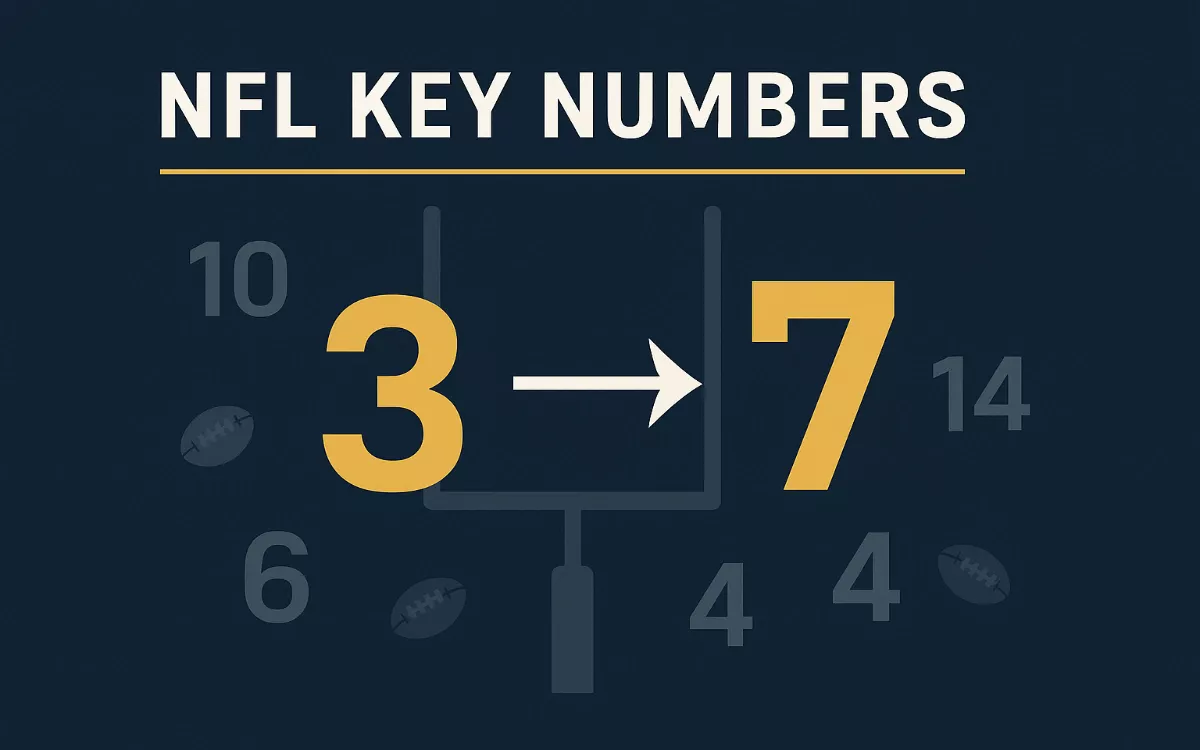
If you’re going to bet NFL spreads seriously, you absolutely must understand key numbers. This isn’t optional background knowledge. It’s fundamental to how the market works and where value exists. Key numbers are point spreads that occur more frequently than others as final margins, and they dramatically affect the value of a bet.
The most important key number in the NFL is three. More games end with a three-point margin than any other number because field goals are common and games are often close. When you’re looking at a spread of -3, that half point matters enormously. The difference between getting +3 and +2.5 is massive. At +3 you push if the favorite wins by exactly three. At +2.5 you lose. Over a season, this happens enough times that it significantly impacts your bottom line.
Seven is the second most critical key number because touchdowns with extra points are seven points. Games also land on seven with high frequency. Other key numbers exist but with less importance: 10, 6, 4, 14. These matter, but not nearly as much as 3 and 7. When you’re line shopping, getting the right side of a key number should be a priority. Taking a favorite at -2.5 instead of -3 isn’t just a half point better, it’s crossing a key number and fundamentally changing your chances.
This creates interesting dynamics in how you should approach teasers. A six-point teaser in football allows you to move the line six points in your favor on multiple games, but you need to win all of them for the bet to pay off. The value in teasers comes from crossing key numbers. Teasing a -8.5 favorite down to -2.5 crosses both 7 and 3, which is powerful. Teasing a -5 favorite down to +1 only crosses 3. Understanding which teasers actually provide value based on key number crossings is what separates sharp teaser bettors from people just blindly teasing favorites.
When the line is sitting exactly on a key number, you need to think carefully about which side to take. If the spread is -3, taking the underdog at +3 gives you the push as a safety net. Taking the favorite at -3 means you need to win by more than the most common margin in football. This doesn’t mean you should always take the underdog at key numbers, but it does mean you need better value to take the favorite. The market knows this too, which is why you’ll sometimes see different juice on each side when the spread is exactly on a key number.
Buying points paying extra juice to move the line in your favor is almost never worth it except in specific situations around key numbers. Buying a half point to move from +2.5 to +3 has actual mathematical value because you’re crossing that crucial number. Buying from +5.5 to +6 is usually a sucker bet where you’re paying too much for marginal improvement. The key is understanding when the additional cost is worth what you’re getting in terms of improved probability of winning.
Key numbers also matter for totals, though less dramatically. In totals betting, 41, 43, 44, and 37 show up more frequently than other numbers. When an over/under is sitting on one of these numbers, getting the right side can matter. But totals key numbers are less impactful than spread key numbers, so while you should be aware of them, they shouldn’t dominate your decision-making the way spread key numbers should.
Situational Betting and Scheduling Spots
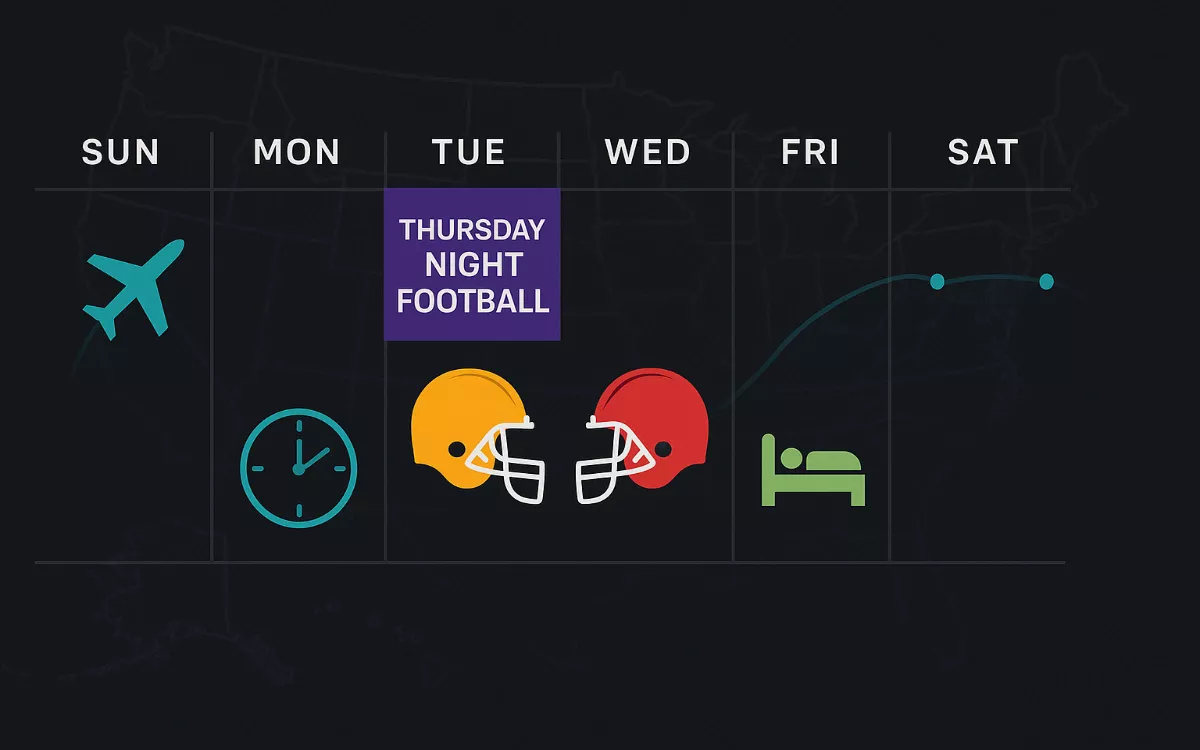
One of the edges that still exists in NFL betting is understanding scheduling situations and how they affect performance. The market adjusts for some of this, but not always perfectly. Teams don’t perform in a vacuum. Context matters, and certain scheduling spots create predictable advantages or disadvantages.
Divisional games are different from conference games are different from out-of-conference games. Teams play their division rivals twice per season, and familiarity breeds both contempt and predictability. Divisional games tend to be closer than the talent differential would suggest because these teams know each other so well. The Patriots and Bills might have a significant talent gap, but when they play twice a year, the Bills keep it closer than they would against a similar quality non-division opponent. This creates value on divisional underdogs in certain situations.
The Thursday night game is a well-known spot where weird things happen. Teams are playing on short rest, which tends to favor whichever team had an easier Sunday game before the Thursday game. If one team played a brutal physical game Sunday and the other had an easy win, the short rest matters more for the team that got beat up. The market knows Thursday games are strange, but it doesn’t always properly adjust for specific rest disadvantages. This is especially true late in the season when injuries and fatigue accumulate.
The dreaded “trap game” scenario is something bettors love to talk about but rarely execute correctly. The theory is that a good team with a tough opponent coming up might overlook a weaker opponent in between. The Chiefs have the Bills next week but first they have to play the Panthers. Maybe they’re already mentally preparing for Buffalo and sleep-walk through Carolina. This sounds logical, and occasionally it happens. The problem is the market knows about trap games too, and every single week multiple games get labeled as trap games by bettors trying to be clever. Most aren’t actually trap games, and betting on them as if they are is a losing proposition.
More reliable are situations involving teams off emotional highs or devastating losses. A team that just won a massive rivalry game in overtime might come out flat the following week. The emotion can’t sustain indefinitely. Similarly, teams that just suffered a heartbreaking loss sometimes respond with focus and determination the next week. The key is identifying when the emotional carryover is real versus when it’s just a narrative bettors want to believe because it makes a good story.
West Coast teams traveling east for early games face genuine disadvantages. Their bodies think it’s 10 AM when they’re kicking off at 1 PM Eastern. This is a real thing, backed by data showing West Coast teams underperform in early East Coast games. The market adjusts for this, but sometimes not enough, especially if the West Coast team is generally good and the East Coast opponent is generally bad. Look for spots where public perception of team quality might be masking a legitimate scheduling disadvantage.
The opposite situation East Coast teams traveling west for late games isn’t as significant. Playing at 8:30 PM Eastern when it’s 5:30 PM Pacific isn’t the same level of disruption as playing at 10 AM body clock time. But primetime games in general have their own dynamics. Teams tend to be more prepared for national TV games. Coaches don’t want to get embarrassed in front of the whole country. This sometimes means favorites cover more often in primetime because they take the game seriously, but it can also mean underdogs play above their heads because of the spotlight.
Revenge game narratives are overrated by the public and underrated by contrarians. The market typically overprices revenge, so just blindly betting on teams playing opponents who beat them last year isn’t profitable. But completely ignoring it is wrong too. When you’re looking at two otherwise equal betting options, tilting toward the team with legitimate revenge motivation can be the tiebreaker. Just don’t let it be the primary reason you make a bet.
Home Field Advantage and Weather Factors
Home field advantage in the NFL is worth approximately 2.5 points, which is why neutral site games have no spread adjustment beyond team quality. But like every rule in betting, this is an average that masks significant variation. Some stadiums are worth more than 2.5 points, some less, and understanding these differences creates opportunities.
Dome teams traveling to play outdoors in bad weather face disadvantages the market sometimes underprices. A team like New Orleans that plays in a climate-controlled environment all season isn’t as comfortable playing in December in Green Bay when it’s 20 degrees and windy. The physical discomfort matters, but so does the lack of practice time in those conditions. These teams don’t prepare for weather because they never experience it at home. When they travel late in the season to cold weather cities, they’re at a genuine disadvantage beyond what the standard home field adjustment captures.
Specific weather conditions affect different aspects of the game differently. Heavy wind doesn’t just lower scoring, it particularly impacts passing games. If you have a pass-heavy offense facing a run-oriented defense in 25 mph winds, that matchup suddenly tilts heavily toward the defense because the offense can’t do what it does best. The market adjusts totals for weather, but it doesn’t always properly adjust spreads to account for how weather impacts specific team styles.
Rain is less impactful than wind for modern football because teams play in rain reasonably often and players are accustomed to it. Heavy rain affects passing accuracy and makes the ball slippery, but good teams adjust their game plans. Light rain is basically irrelevant. Where rain matters is in combination with cold temperatures creating muddy, difficult field conditions, particularly later in games when the field gets torn up. But again, this is priced into totals more than spreads.
Temperature alone matters less than people think until you get to extreme cold. Playing in 45 degrees instead of 70 degrees isn’t a huge deal for professional athletes. Playing in 10 degrees is legitimately difficult, especially for skill position players who need dexterity to catch and throw the ball. Snow games are unpredictable because snow can fall lightly or heavily, start mid-game, and create rapidly changing conditions that neither team anticipated. The market struggles with snow games because there’s so much uncertainty about conditions.
Altitude in Denver creates a legitimate advantage that’s probably worth more than the standard 2.5 point home field. Visiting teams genuinely tire faster at altitude, especially in the fourth quarter. The Broncos practice at altitude year-round, so they don’t experience the same fatigue. This edge is priced into Denver home lines, but occasionally it’s underpriced, particularly when Denver is playing a dome team from sea level that has never dealt with altitude before.
Crowd noise matters more than casual fans realize. Outdoor stadiums with passionate fanbases create hostile environments that affect communication and focus. Seattle, Kansas City, and a few other stadiums are legitimately difficult places to play because visiting teams struggle with pre-snap communication. The quarterback can’t change plays at the line. The offense jumps offsides because they can’t hear the snap count. This shows up in penalties and broken plays that aren’t necessarily captured in standard team statistics but meaningfully affect outcomes.
The time of season also interacts with home field advantage. Early season, teams are relatively fresh and well-prepared, so home field might matter less. Late season, as fatigue sets in and weather becomes a factor, home field advantage increases slightly. Playoff home field is worth even more because the stakes are higher and the crowds are more intense. These are subtle differences, but in a market as efficient as the NFL, subtle differences are where edges live.
Injury Analysis Beyond the Star Players
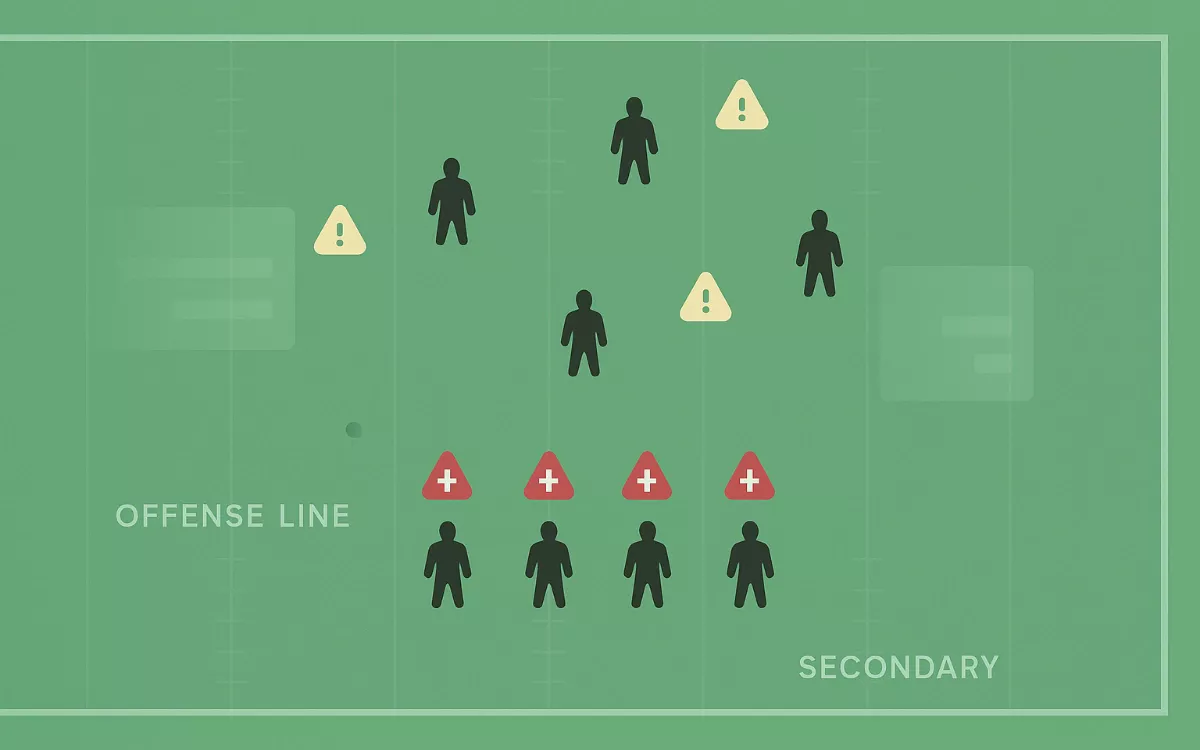
Everyone knows to check the injury report. If the starting quarterback is out, the line moves dramatically. If the best wide receiver is questionable, the market adjusts. But most bettors stop there, and that’s a mistake. The real edge in injury analysis comes from understanding injuries to less-publicized players whose absence significantly affects the team but might not be fully priced into the line.
Offensive line injuries are chronically underpriced by the market. When a starting left tackle is out and replaced by a backup, that’s a massive downgrade that affects everything the offense does. The quarterback has less time. The running game is less effective. The entire rhythm of the offense changes. But because offensive linemen don’t catch touchdowns and don’t show up in fantasy football, the public doesn’t care about them as much as they should. The market adjusts, but often not enough, especially for interior line injuries that get even less attention than tackle injuries.
Defensive line depth matters enormously in today’s NFL. Teams that can rotate defensive linemen and keep them fresh have a huge advantage in the fourth quarter. If a team loses a key rotational defensive lineman, it doesn’t immediately show up as a massive adjustment to the line because he wasn’t a starter. But over the course of the game, the lack of depth means the remaining linemen get tired and performance suffers. This is particularly relevant against run-heavy teams that want to grind out games and wear down defenses.
Secondary injuries create exploitable matchups. If a team’s best cornerback is out, the opposing offense can target whoever is covering their best receiver and potentially have a mismatch all game. The market adjusts the total, but it might not properly adjust the spread if the public is still betting based on general team quality rather than specific matchup implications. A backup corner facing a number one receiver is a legitimate problem that can swing games.
Injury reports are unreliable, which is part of what makes this tricky. Teams have incentive to obfuscate. A player listed as questionable might definitely play but the team wants to keep the opponent uncertain. Another player listed as questionable might have almost no chance of playing. You need to look beyond the official report to beat reporters, practice participation, and historical patterns for how specific teams handle injury reporting. Some teams are honest, some teams are cryptic, and knowing which is which helps you interpret the information more accurately than the general public.
The timing of injuries within a game also matters for live betting. If a key player goes down in the first quarter, the market will overreact because it’s fresh and dramatic. But the team had all game to adjust. If a key player goes down in the fourth quarter, the market might underreact because the game is almost over. Understanding how much game time is left to absorb the impact of an injury helps you identify live betting value when injuries occur mid-game.
Coaching Matchups and Game Planning
NFL coaches aren’t created equal, and coaching edges matter more than the public appreciates. A great coach can scheme around talent deficits and put players in position to succeed. A mediocre coach can waste a talented roster. Understanding coaching tendencies, preparation habits, and specific matchup advantages creates betting edges.
Head coach quality is obvious and usually priced in. Everyone knows Andy Reid is elite and whoever is coaching a bottom-tier team probably isn’t. But coordinator matchups are less efficiently priced. A great offensive coordinator against a terrible defensive coordinator creates an advantage that might not be fully reflected in the line if the public is betting based on overall team records. Coordinators game-plan against specific opponents, and some coordinators are much better at this than others.
Offensive and defensive schemes matter enormously for matchups. A zone defense struggles against teams with effective route combinations designed to find holes in zones. A man-defense struggles against teams with speed mismatches. If you know Offense A runs scheme X and Defense B struggles specifically against scheme X, that’s valuable information that might not be captured in basic team statistics. The market is reasonably efficient at pricing this for high-profile matchups, but for lesser-followed teams, there are opportunities.
Coaching preparation time is a significant edge that varies by coach. After a bye week, some coaches consistently have their teams looking sharp and well-prepared. Others seem to waste the extra time. Track which coaches historically do well off byes and which don’t, and bet accordingly. The market adjusts for bye weeks generally, but it doesn’t always properly adjust for specific coaches’ ability to use preparation time effectively.
In-game adjustment quality shows up in second half performance. Some coaches are excellent at halftime adjustments. They identify what the opponent is doing, make changes, and come out in the second half with better answers. Other coaches are rigid and don’t adjust well. If you’re live betting, knowing which coaches adapt and which don’t gives you an edge in predicting second half performance relative to first half performance.
Young coaches versus veteran coaches presents an exploitable angle. Young coaches sometimes get out-schemed by veterans who’ve seen everything. But young coaches also sometimes bring innovative ideas that older coaches haven’t adapted to yet. There’s no universal rule, but watching specific coaching matchups over time reveals patterns in which coaches consistently struggle against which other coaches.
Applying these football tactics requires discipline, which is why understanding sports betting psychology is essential before placing your wagers.
Advanced Statistical Approaches
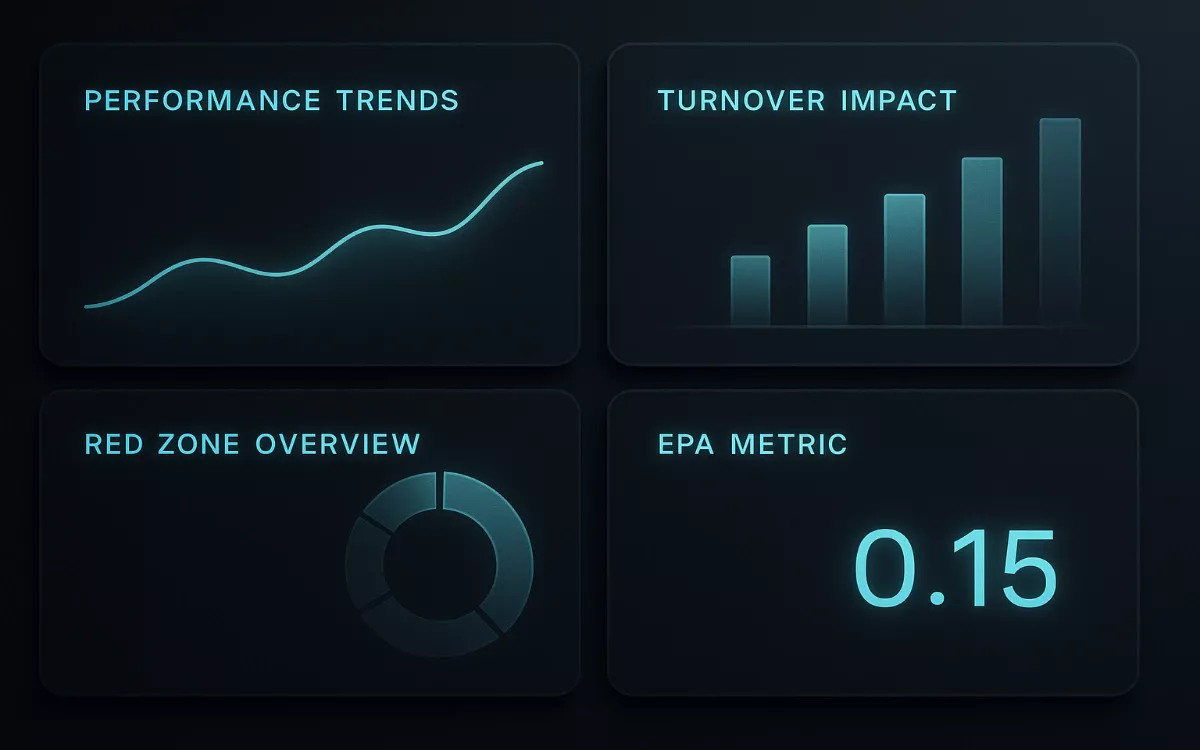
The NFL is drowning in statistics, but most of them are useless for betting purposes. Points per game, yards per game, win-loss records everyone has access to this information and it’s completely priced into the market. If you want an edge, you need to dig deeper into statistics that actually predict outcomes and aren’t yet fully incorporated into lines.
Yards per play is significantly more predictive than total yards because it accounts for pace and volume. A team that runs 75 plays and gains 375 yards isn’t as good as a team that runs 60 plays and gains 360 yards, even though the total yards are similar. The efficiency matters more than the volume. When you’re evaluating teams, focus on per-play metrics rather than per-game totals, and you’ll get a clearer picture of true team quality.
Turnover luck is one of the most mean-reverting statistics in football. Teams that have unusually high or low turnover rates will regress toward average. If a team is 8-2 but they’ve had a plus-7 turnover differential and most of those turnovers were lucky bounces, they’re probably not actually as good as their record suggests. The market adjusts for record but not always for whether that record is sustainable based on underlying metrics. Teams getting lucky with turnovers are often overvalued.
Red zone efficiency tells you a lot about whether a team’s production is sustainable. A team scoring a lot of points but struggling in the red zone is probably getting lucky with big plays and will regress. A team with great red zone efficiency is doing something real that’s likely to continue. Similarly, red zone defense is highly predictive. Teams that force field goals instead of allowing touchdowns inside the 20 have an edge that shows up in close games.
Third down conversion rates matter because they determine who controls games. A team that consistently converts third downs sustains drives, controls possession, and wears down defenses. A team that consistently stops third downs gets off the field and gives their offense more opportunities. Third down performance is more stable over time than points per game and provides better insight into sustainable team quality.
Expected points added and win probability added are advanced metrics that account for context in ways traditional stats don’t. A five-yard gain on 3rd-and-3 is vastly more valuable than a five-yard gain on 1st-and-10, but traditional stats treat them the same. EPA accounts for the situational value of each play. These metrics require some understanding of analytics to use effectively, but they’re more predictive than box score stats.
Live stats during games create live betting opportunities if you’re watching closely. If one team is dominating in yards per play but the score doesn’t reflect it yet, that’s often an indicator they’ll eventually cover the spread or win outright. Football has enough variance that the better team doesn’t always lead at every moment, but over four quarters, the better team usually wins. Being able to identify which team is actually playing better beyond what the scoreboard shows gives you an edge in live markets.
Money Management for NFL Season Structure
The NFL season is short compared to baseball or basketball. Eighteen weeks of regular season plus playoffs means you have limited opportunities to let your edge play out. This creates unique money management considerations that differ from sports with 82 or 162 game seasons.
Your unit size probably shouldn’t change much week-to-week, but your total volume should. Some weeks have better betting opportunities than others. Week 1 often has softer lines because there’s no game film from the current season and everything is based on projections. Week 2 has the opposite problem where the market overreacts to Week 1 results. Understanding the rhythm of the season helps you identify when to be more active versus when to be selective.
Early season betting requires accepting more uncertainty. Teams change from year to year. Rookies step into bigger roles, schemes change, coaching turnover happens. The market struggles with this uncertainty, which creates opportunity. But it also means your analysis needs to account for higher variance. Don’t bet as confidently on Week 1 assessments as you would on Week 10 assessments when you have more data.
Mid-season is when you theoretically should have the best information. Sample sizes are getting large enough to be meaningful. You’ve seen every team multiple times. The market has settled into relative efficiency. This is when technical edges become harder to find but strategic edges around specific matchups become more exploitable. You should be betting more selectively mid-season and focusing on spots where you have genuine conviction.
Late season introduces new variables around playoff implications, weather, and teams resting players. These factors create chaos that the market sometimes struggles to price. A team locked into a playoff seed might rest starters, but when that decision gets made affects the line movement. If you can predict when teams will rest players better than the market, there’s value to be captured. Similarly, teams fighting for playoff spots sometimes outperform in must-win games, though this is widely known and probably overpriced.
Surviving the season with bankroll intact should be the goal, not making a killing on any single week. The NFL season is a marathon disguised as a series of sprints. Bettors who go all-in on big parlays trying to hit it big usually flame out by mid-season. Bettors who methodically grind out small edges across hundreds of bets over the season are the ones who end the year profitable. Boring and disciplined beats exciting and reckless every time.
Find the most reliable sports betting tips and strategies on our main page to elevate your game.
